
Australia Has a Blue-Collar Skills Crisis. We're Also Ignoring Half the Workforce.
If you're hiring in construction, logistics, manufacturing or warehousing right now, you already know the pain. Roles sit open for weeks. Agencies burn through candidate lists. Projects slip. And everyone keeps asking the same question: where are all the workers?
The usual answers point to migration settings, apprenticeship pipelines, or the lure of the mining sector. All fair points. But there's a quieter story playing out in the background that doesn't get enough attention. Thousands of skilled, capable Australians in their 50s and 60s are being filtered out of the hiring process before they even get a fair crack. Not because they can't do the job. Because the way we hire quietly works against them.
It's time to talk about mature-age workers as a serious, strategic answer to the blue-collar skills shortage.
The Numbers Don't Lie: Older Workers Are Being Left Behind
The Australian Bureau of Statistics reports that workers aged 55 and over now make up around 17% of the labour force, yet they remain significantly underrepresented in new hires across trade and labour-heavy industries. The Human Rights Commission has flagged age discrimination as one of the most reported forms of workplace bias in Australia, and it's particularly stubborn in sectors that prize physical stamina and "fresh starts."
The irony? Many of these same industries are desperate for people who can actually do the work.
Here's what gets missed when recruiters default to younger candidates:
- Experience that shortcuts training time. A 55-year-old rigger doesn't need three months of site induction basics explained twice.
- Lower turnover. Mature-age workers tend to stay longer in roles, reducing the constant churn that plagues contingent hiring.
- Mentoring capacity. They've seen safety incidents, near misses, and bad calls. That institutional knowledge is gold on a worksite.
- Reliability. Multiple Australian workforce studies show older workers have lower absenteeism and higher commitment rates.
So why aren't we hiring them in droves?
The Bias Hiding in Plain Sight
Age bias in blue-collar hiring rarely looks like outright prejudice. It's more subtle than that. It shows up in job ads that say "energetic" or "junior" when the role needs neither. It shows up in resume screening tools that flag gaps in employment. It shows up in interview panels who unconsciously equate youth with potential and grey hair with decline.
And it shows up in the technology we use to screen candidates.
Many traditional recruitment platforms rely on profile photos, names, and age indicators that trigger snap judgments before a recruiter has even read the skills section. That's a problem. Because when you strip those signals away and assess purely on capability, mature-age candidates consistently perform as well as or better than their younger peers.
This is exactly why de-identified, skills-first hiring matters. When recruiters can't see a candidate's age, face, or name up front, they're forced to engage with what actually matters: can this person do the job?
What Mature-Age Workers Bring to Blue-Collar Roles
Let's get specific. If you're running a warehouse in Western Sydney, a construction site in Melbourne's west, or a logistics operation out of Brisbane, here's what an experienced older worker brings to the table.
Proven Technical Skill
Trades don't retire at 50. A fitter who's spent 30 years maintaining plant equipment has a diagnostic instinct that no TAFE module can teach. A forklift operator who's navigated five different warehouse layouts knows how to adapt when the floor plan changes.
Leadership Without the Title
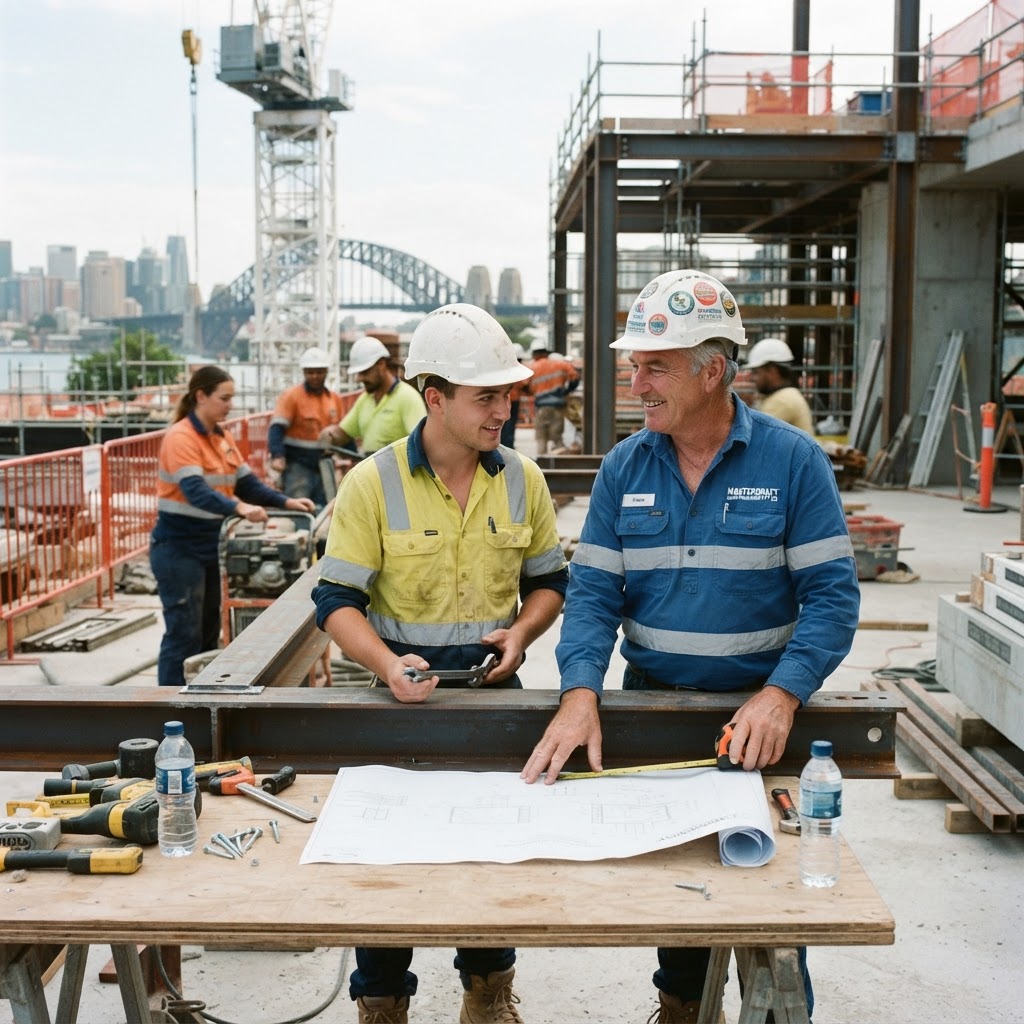
Mature-age contingent workers often step into informal leadership roles on site. They're the ones pulling aside a 22-year-old apprentice to explain why you check the chain tension before lifting. That's not in the job description, but it's worth its weight in gold.
Stability in a Volatile Market
Contingent workforce hiring lives and dies on reliability. When you're filling a six-month contract, you want someone who shows up every day, handles the physical demands, and doesn't chase the next gig in week three. Older workers consistently score higher on these metrics.
The Physical Question: Honest, Not Avoidable
Let's address the elephant in the room. Yes, some blue-collar roles are physically demanding. And yes, age can be a factor in physical capacity. But here's the thing: so can a 28-year-old who's never stretched in their life.
The answer isn't to make assumptions. It's to assess properly.
A skills-first approach means testing the actual capability required for the role, not filtering people out based on assumptions about age. If a role involves repeated heavy lifting above shoulder height, test that. If it requires sustained concentration on a production line, assess that. Let the work tell you what you need, not the birthdate on a licence.
Modern workplaces are also getting smarter about this. Ergonomic equipment, mechanical aids, and rotating task design have made many physically demanding roles far more accessible across age groups than they were a decade ago.
Building Age Diversity Into Your Hiring Strategy
If you're an employer or agency serious about tapping into this talent pool, here are some practical shifts to make.
- Audit your job ads. Remove language that signals youth preference unless it's genuinely relevant. "Junior" and "graduate" have their place, but don't slap them on roles that don't need them.
- Rethink screening tech. If your platform surfaces photos, ages, or graduation years prominently, you're inviting bias. Consider a de-identified, skills-first hiring marketplace where candidates are presented on capability first.
- Track age diversity like you track gender diversity. What gets measured gets managed. If you're not looking at the age profile of your hires, you're flying blind on one of the most impactful diversity metrics available.
- Train interview panels. Brief anyone involved in hiring on age bias. It's quick, it's cheap, and it works.
- Engage specialist representation. Some candidates, particularly mature-age workers who've been out of the market for a while, benefit from being exclusively represented by an agency that advocates for them rather than dumping them into a generic talent pool.
The Business Case Is Clear
McKinsey research has consistently shown that diverse organisations outperform their peers on profitability and decision-making. Most of that work focuses on gender and cultural diversity, but age diversity is emerging as a parallel driver of performance, particularly in operational and frontline environments.
For contingent workforce hirers, the maths is simple. If you're struggling to fill roles and you're overlooking a motivated, experienced, stable talent pool because of how your hiring process is built, that's not a candidate problem. That's a process problem.
A Smarter Way to Hire
At Find Your People, we've built a hiring marketplace that flips the default. Candidates present on skills, not demographics. Employers and agencies engage with de-identified profiles that surface capability first. Diversity tracking is built in, so you can see exactly how your hiring breaks down across age, gender, and background. And our neutral vendor model means agencies compete on the quality of their candidates, not the size of their marketing budget.
It's the kind of structure that naturally opens doors for mature-age workers who've been quietly locked out of the conversation for too long.
If you're an employer tired of unfilled roles or an agency looking to access a broader, higher-quality candidate pool, it's time to see how skills-first hiring actually works in practice.
Book a demo with the Find Your People team today and discover how de-identified, skills-first matching can connect you with the experienced talent you've been missing.